Wrecked After Daycare? Telling Good Tired from Bad Tired — and Planning a Softer Landing
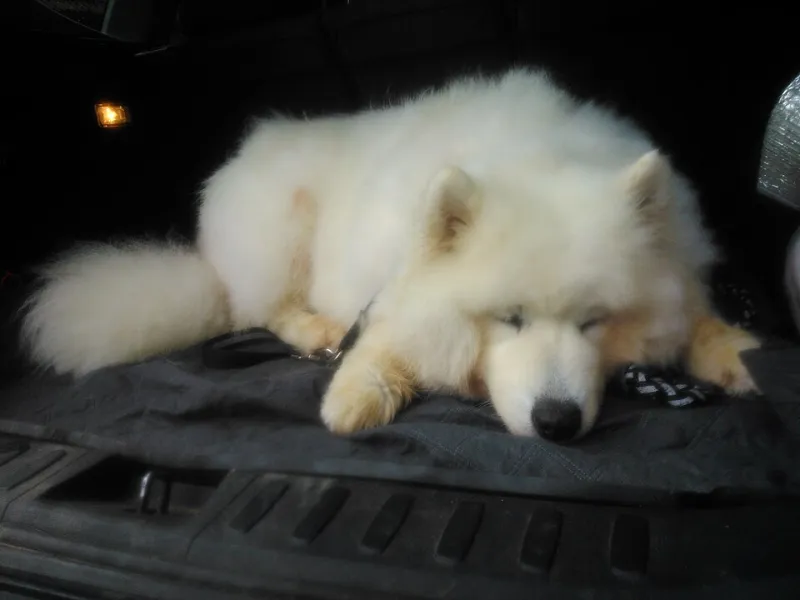
Photo: Stiller Beobachter from Ansbach, Germany, CC BY 2.0, via Wikimedia Commons
You collect your dog at half five, they bounce into the car, and by the time you're three streets from home they're asleep with their chin on the handbrake. At seven they eat dinner like they've been at sea for a month. By half seven they are a puddle on the hall floor and you're wondering whether you've broken them.
You haven't. Probably. A day of doggy daycare is genuinely hard work — physically, socially and mentally — and the crash that follows is a normal part of the deal. But 'normal' and 'always fine' aren't the same thing, so it's worth knowing what you're actually looking at.
What's Really Going On in That Head
We tend to think of daycare as a run around. In reality it's a long, busy day of small decisions. Should I greet that spaniel? Is that collie playing or telling me off? Where's my water? Who's got the ball? Can I rest here or will someone stand on me?
Every one of those is a tiny bit of mental processing, and they add up. Social play is cognitively expensive in a way that a solo sniff around the park simply isn't. On top of that there's the physical load — sprinting, wrestling, sudden stops — and a fair bit of sensory input: different sounds, different smells, staff moving about, gates clanging.
A dog who is quiet and floppy afterwards is usually a dog who spent their social budget wisely. One who is restless, snappy or oddly wired at midnight may have spent a bit too much.
Good Tired vs Bad Tired
Neither list is a diagnosis, but they're a useful guide.
Good tired looks like:
- Deep, relaxed sleep with loose limbs and a soft face.
- A keen but unhurried interest in dinner and water.
- Gentle tail wags when you speak, then straight back to dozing.
- A normal (if shorter) walk the next morning, and a quick return to their usual self within 12–24 hours.
Bad tired looks like:
- Pacing, panting or circling at bedtime, unable to settle even when exhausted.
- Snapping at a hand that reaches for their collar, or a sudden flinch when touched.
- Refusing food, or drinking far more than usual.
- Stiffness the next day, limping, or an unusual reluctance to climb the stairs.
- Irritability with the household dog that lingers into a second day.
If you see the second list consistently, that's information, not a personality flaw. It usually means the day was too long, too unstructured, or too much for that particular dog at that particular stage.
The First Hour Home: Build the Landing
The mistake most of us make is treating collection time as the start of the evening. It isn't — it's the beginning of a decompression that needs a bit of shape.
Keep it boring on purpose. Garden wees, no big greeting party at the door, no visitors, no trip to the shops. Dim the lights a notch. Put the radio on low if that's what usually happens at home. If there's a dog next door who likes to shout through the fence, don't stand about in the garden reliving the day.
Food can wait twenty minutes. Water should be available, but offer it in small amounts rather than a bucket they can drain in one go.
Dinner, Wees and the Wind-Down
A tired dog will often eat too quickly, so a slow feeder or a scatter feed on the lawn is kind on the digestion. Keep the evening meal at the normal time and the normal size — an enormous portion after a big day is a recipe for a 2am request to go outside.
Then: one final garden trip, teeth if that's your routine, bed. If your dog sleeps in the kitchen, that's fine. If they normally sleep upstairs with you and seem unsettled, let them. The night after daycare is not the moment to defend a house rule.
Chews help. A long-lasting chew or a lick mat gives a tired brain something gentle and rhythmic to do, and licking is genuinely soothing for most dogs. It's the canine equivalent of a warm bath and a rubbish film.
The Day After: Go Lighter
Here's the bit people skip. If Wednesday is a daycare day, Thursday shouldn't be a big park session with the neighbours' labradoodle. Give them a slower start, a sniff-heavy walk on a long line rather than a sprint, and a bit of quiet time with something to chew.
Mental work is a nice fit here — a scatter feed in the garden, a cardboard box with kibble in it, a few minutes of easy training. It tires a dog without asking much of their body.
Watch for stiffness. If your dog is stiff or reluctant on the stairs the next morning, cut the walk shorter again and give it another day. And if the stiffness doesn't clear within 48 hours, ring your vet — especially in older dogs or breeds prone to joint trouble.
How Many Days Is Too Many?
There's no universal number. A bouncy two-year-old working breed might thrive on three days a week. A greyhound, a senior, a puppy, or a dog who finds other dogs a bit much may be far happier with one day, or a half day.
A few things worth asking yourself:
- Do they go in eagerly, or hesitate at the door?
- Are they recovering within a day, or still flat two days later?
- Is the play they're getting matched to their style — chase, wrestle, or gentle parallel sniffing?
- Are they still enjoying their normal walks and training, or have those become a chore?
If the answer to the last two is shaky, drop a day and see. Fewer, better days usually beat more, blurrier ones.
When It's Not Just Tiredness
Tiredness should improve with rest. If your dog is lethargic beyond 24 hours, off their food, vomiting, limping, or showing a change in behaviour that worries you, speak to your vet rather than waiting it out. Daycare staff are also a great source of information — ask how the day actually went. A good team will tell you honestly if your dog spent the afternoon guarding a bed rather than playing.
Finding the Rhythm
A daycare hangover is, in the end, a sign that something good happened. The trick is matching the size of the day to the size of the dog, and giving them a soft place to land afterwards. Do that, and the flop on the hall floor stops being a worry and starts being the whole point.